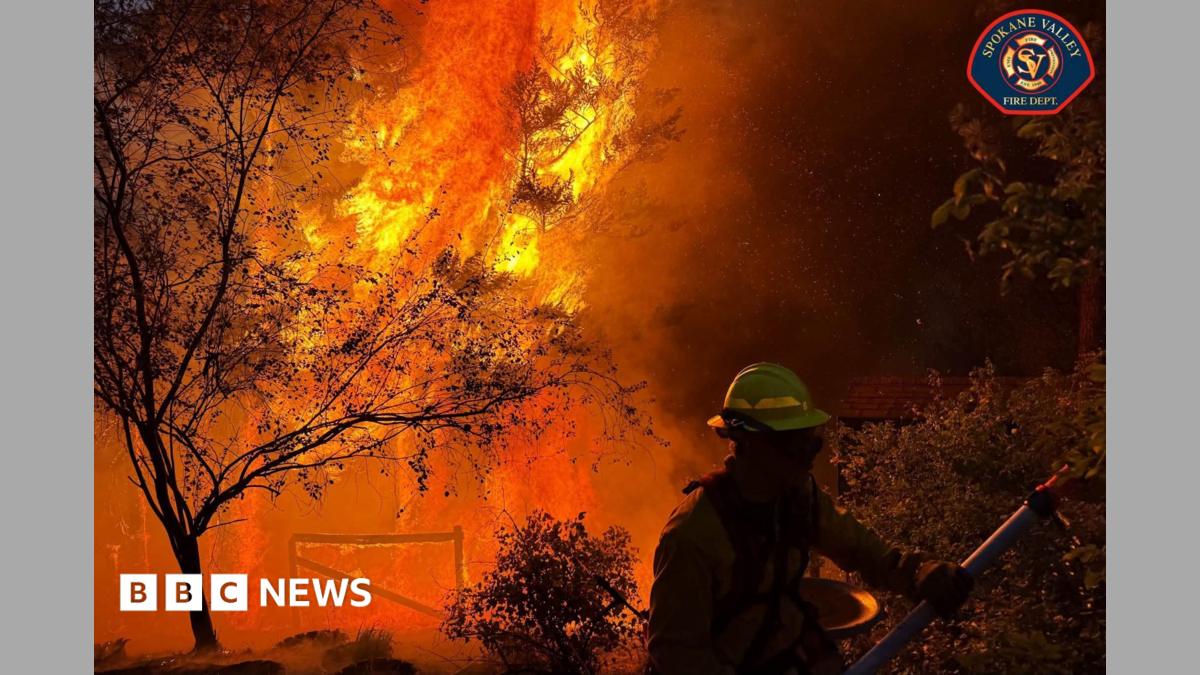
Wildfires burning in the Spokane area have destroyed hundreds of homes and other structures, forcing large numbers of residents from their properties. Washington Examiner headlined it "Washington state fires destroy hundreds of buildings and force Spokane-area residents to evacuate". BBC News headlined it "Washington state wildfires trigger evacuations".
Officials described the scale of displacement as significant. BBC News headlined it "Washington state wildfires force 60,000 people to evacuate homes". Multiple blazes burning across the region together consumed thousands of acres and destroyed hundreds of structures, according to fire officials. NBC News said: "The three fires in the Spokane area — the Old Trails Fire, the Fairview Fire and the Autumn Lane Fire — together have burned more than 8,000 acres and destroyed hundreds of structures, according to fire officials."1
No deaths have been confirmed in connection with the fires.
A man was arrested on suspicion of arson in connection with the largest of the fires, with authorities saying he had a history of setting fires and waited for a dry, windy day to start the blaze.
Some officials spoke about cooperation among local leaders in responding to the disaster. The Daily Wire said: "Rep Michael Baumgartner: "This is an unprecedented catastrophe for the Spokane area, but I think we're going to see unprecedented collaboration in responding to this fire." "This is not Republicans and Democrats you're seeing before you. This is concerned elected officials."
Others pointed to broader climate conditions as context for the fires. Warmer winter conditions and reduced snowfall were cited as factors that helped create conditions favorable to this year's fires. Al Jazeera English said: "Daniel Swain, a climatologist at the University of California, Los Angeles, said eastern Washington had experienced one of its warmest winters on record, resulting in a severe snow drought that helped set the stage for this year’s fires." Climate change has more broadly been identified as a long-term driver of wildfire risk across the Western United States. Grist stated: "Climate change, which stokes intense heat, longer droughts, and extreme weather, has been the primary driver of wildfire risk in the Western United States for the last two decades, according to the National Oceanic and Atmospheric Administration."
Grist headlined it "Wildfire season is changing. Spokane is showing how.".