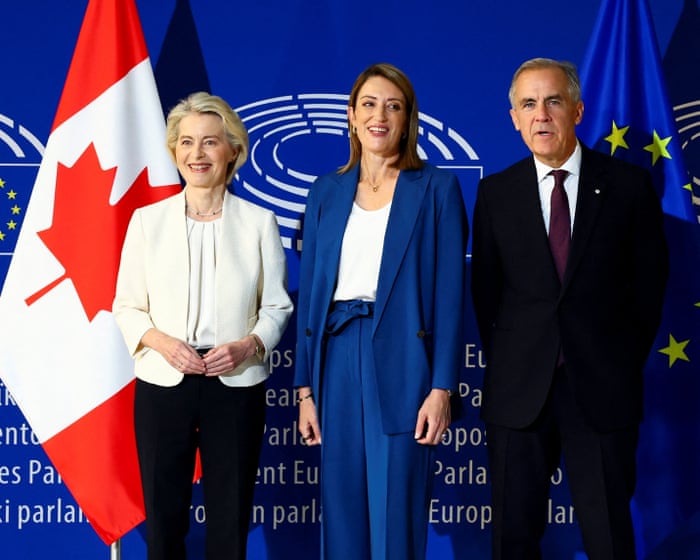
European Commission president Ursula von der Leyen proposed that Canada become the European Union's first associate member, as Canadian Prime Minister Mark Carney pursued closer ties with the bloc amid a trade dispute with the United States involving tariffs and rhetoric about Canada becoming the 51st state.
New York Post quoted von der Leyen telling Carney, "I would like to work with you on opening the door for Canada being the first associate member of the EU."1
Carney described the initiative in terms of a distinct partnership rather than full membership. BBC News (US & Canada) quoted him saying, "What we are looking, and will begin discussions for, [is] a unique alliance with the European Union."2 Deutsche Welle (English) separately quoted him stating, "We're not looking to become a member of the European Union."3
The Daily Wire quoted President Trump warning of consequences if the arrangement proceeded: "If they do that, if I think it's at all a hostile act, I will put very serious tariffs or stop trading with Europe on many things."4
The Guardian (Business) quoted Pierre Poilievre objecting to outside regulatory influence: "The welder from Welland didn't elect a Eurocrat to regulate our steel. The farmer from Saskatchewan and the fisher from the Atlantic provinces didn't choose a Brussels food regulator who has never seen our prairies or our coasts."5
Jacobin, assessing the trajectory of the relationship, stated that if the associate membership proposal goes forward, it will merely cement the direction that Canada-EU relations were already headed in.